The Void: How Pressure Works When You Cannot See
A tape study of The Void: 28 minutes of blindfolded submission wrestling, two camera angles, and why weight and contact beat sight on the mat.
Most grappling starts with the eyes. You read the stance, the hands, the weight shift, and you react before contact. Take the eyes away and you find out what a grappler actually has.
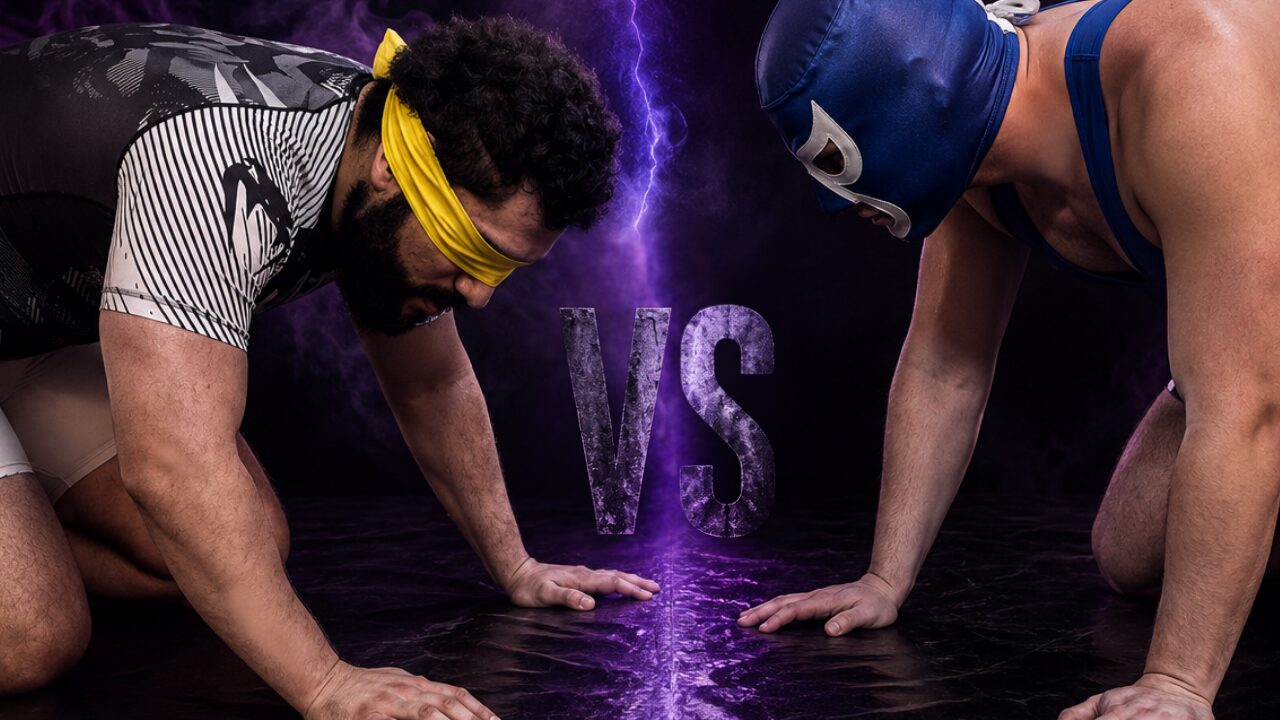
The Void is that test. Rob wrestles the full match blindfolded. His opponent, the masked Mini-Titan, can see everything. On paper that is an advantage for the smaller, quicker man. On the tape it lasts until the first real contact.
The setup: one man blind, one man masked
The match runs 28:45 on black mats in an enclosed room with padded walls. Rob wears a yellow blindfold from start to finish. It never comes off. Mini-Titan stays masked throughout.
That pairing is the whole premise. Mini-Titan brings agility and evasion. Rob brings mass and patience. The question the match asks is simple: can movement keep a man away from pressure he cannot see coming?
Phase one: hunting without sight
The opening minutes are the least comfortable part of the tape, and the most instructive. Hands reach into empty space. Breathing is the only signal. Rob does not lunge. He narrows the room.
This is the first lesson for anyone studying position. When you lack information, you do not gamble on speed. You reduce the space your opponent can use. In an enclosed room, the walls do half of that work.
Phase two: contact changes everything
Once Rob gets a grip, the match flips. He does not chase. He collapses his weight onto Mini-Titan and pins him against the padded walls, turning the room into a cage.
Here is why sight stops mattering at this point. Grappling at close range runs on touch, not vision. Chest-to-back or chest-to-chest, you feel the hips turn before you could ever see it. Every attempt Mini-Titan makes to create space tells Rob exactly where he is. The blindfold costs Rob the approach. It costs him nothing once they are tangled.
Phase three: the positions that end the argument
From there Rob works through a sequence of controlling positions:
- Body triangles that lock the legs around the torso and restrict breathing.
- Rear mounts that pin the hips and take away the base needed to escape.
- Submission hunting done slowly and calmly, with no wasted scrambles.
None of these need eyes. A body triangle is a squeeze you can hold by feel. A rear mount is a weight position. The submission search is the only part that could use sight, and Rob handles it by keeping the position tight enough that the opening comes to him.
Mini-Titan twists, turns and fights for space for the length of the match. The tape is a clear study of why that rarely works against heavy, settled weight: each escape attempt spends energy, and the position on top of him does not get tired.
Why two camera angles matter here
The Void is shot from two distinct camera angles. In a blindfolded match that matters more than usual. One angle shows what Rob is doing with his weight. The other shows what it is doing to the man underneath. When you are studying a position you cannot see from the inside, seeing it from both sides is the point.
Where to watch it
The Void is a premium private vault release, available on GetWrestle and WatchFighters. A private purchase gets you access first. If you study pressure grappling, this is the match that isolates it: no sight, no tricks, only weight and contact.
For more matches built on heavy top control, browse the match catalog or the VIP archive.
Reply
Question about this post?
No comment box. Drop your email, reply to the next issue with your question.
18+ only. Private updates. Unsubscribe anytime.
Discussion happens in Telegram.Join the free channel